
Human Anatomy & Physiology explores the body’s structure and function, utilizing resources like OpenStax textbooks available for free download in PDF format.
What is Anatomy?
Anatomy, fundamentally, is the study of the structure of the human body. It delves into the organization of systems, organs, tissues, and even cells, examining their locations and interrelationships. Resources like the OpenStax Anatomy and Physiology textbook, freely available as a full-color PDF, provide a comprehensive foundation in this discipline.
This exploration isn’t merely descriptive; it’s about understanding how the body is built. Anatomy encompasses both gross anatomy – what’s visible to the naked eye – and microscopic anatomy, requiring tools to observe cellular structures. Understanding anatomical structures is crucial, as it directly informs our comprehension of physiological processes. The textbook, a product of Textbook Equity and Open Education initiatives, offers detailed illustrations and descriptions, aiding in visualizing these complex structures.
What is Physiology?
Physiology is the study of function – how the body parts work, both individually and in concert, to maintain life. It investigates the chemical and physical processes occurring within the body, from the molecular level to the whole organism. Complementary to anatomy, physiology explains why the body is built a certain way.
Resources like the OpenStax Anatomy and Physiology textbook, accessible as a free PDF, are invaluable for grasping these concepts. Physiology explores processes like nerve impulse transmission, muscle contraction, and hormone regulation. It’s a dynamic field, constantly evolving with new discoveries. Understanding physiology requires a solid anatomical base, as function is inextricably linked to structure. Crash Course video series, alongside textbooks, can further enhance comprehension of these intricate mechanisms.
Levels of Organization
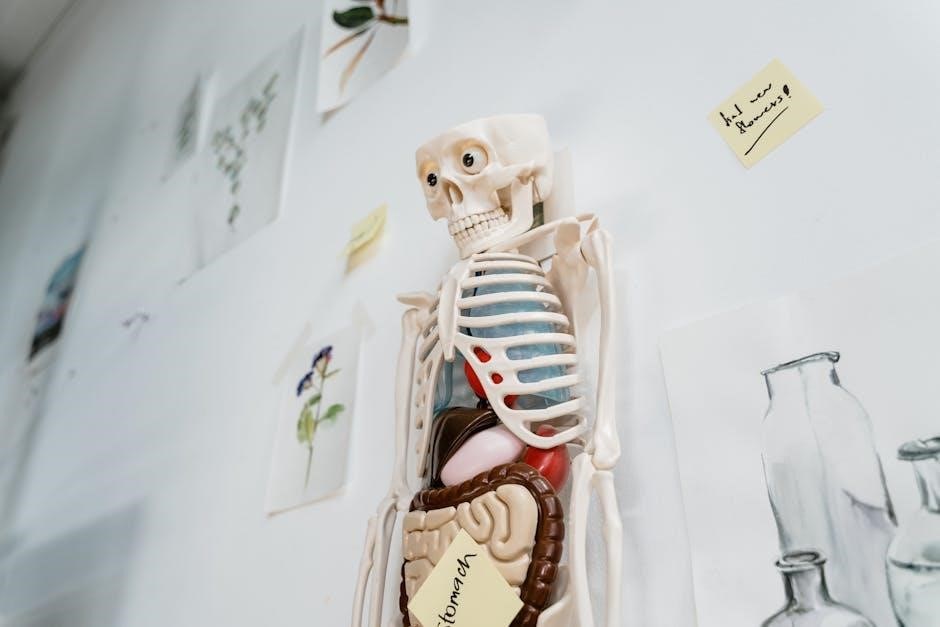
Human Anatomy & Physiology examines organization from chemical to organismal levels, utilizing resources like the OpenStax textbook available as a free PDF.
Overview of the Human Body
Understanding the human body requires a systematic approach, beginning with a broad overview of its intricate organization. Resources like the OpenStax Anatomy and Physiology textbook, freely available as a full-color PDF, provide a comprehensive foundation. This text, originally from Rice University, details the body’s structural levels – chemical, cellular, tissue, organ, and organ system – and how they interact.
Furthermore, supplemental materials such as the Human Body Explorer, offering detailed 3D interactive images, enhance comprehension. The Oak Meadow coursebook utilizes Stephen Nowicki’s Biology alongside these resources. Exploring these levels reveals how each component contributes to the overall functioning of the organism, emphasizing the interconnectedness vital for maintaining life. Crash Course videos also offer accessible explanations.
Structural Organization of the Human Body
The human body exhibits a remarkable hierarchical structural organization, starting with atoms and molecules and progressing through cells, tissues, organs, and ultimately, organ systems. OpenStax’s Anatomy and Physiology, accessible as a free PDF, meticulously details each level. This textbook, originating from Open Education Resources, emphasizes how structure dictates function.
Four primary tissue types – epithelial, connective, muscle, and nervous – form the building blocks of organs. These organs collaborate within organ systems, such as the skeletal, muscular, and nervous systems, to perform specific functions. Resources like the Human Body Explorer visually demonstrate these complex relationships, while preparatory courses, like Liachovitzky’s LibreText, introduce foundational concepts. Understanding this organization is crucial for comprehending physiological processes.
Functions of Human Life
Essential functions sustain human life, encompassing organization, metabolism, responsiveness, growth, reproduction, and movement. Resources like the OpenStax Anatomy and Physiology textbook – available as a free PDF – thoroughly explain these processes. Metabolism, the sum of all chemical reactions, is central to energy utilization. Responsiveness allows adaptation to environmental changes, crucial for maintaining internal stability.
Growth and reproduction ensure species continuation, while movement facilitates interaction with the surroundings. These functions are interconnected and rely on the coordinated activity of various organ systems. Supplementary materials, such as the Human Body Explorer, offer interactive visualizations. Preparatory courses, utilizing LibreTexts, build a foundational understanding of these vital life processes, preparing students for advanced study.
Requirements for Human Life
Human life necessitates specific environmental conditions for survival, including oxygen, water, nutrients, and appropriate temperature. These requirements are comprehensively detailed in resources like the OpenStax Anatomy and Physiology textbook, freely accessible as a PDF. Oxygen supports cellular respiration, while water is vital for numerous bodily functions. Nutrients provide energy and building blocks for tissue maintenance and growth.
Maintaining a stable body temperature is crucial for optimal enzyme function. These requirements are interconnected; disruption of one impacts others. Courses utilizing materials from Oak Meadow and Los Angeles Valley College emphasize these essentials. Interactive tools, like the Human Body Explorer, illustrate how systems work to fulfill these needs, ensuring homeostasis and overall well-being.
Homeostasis
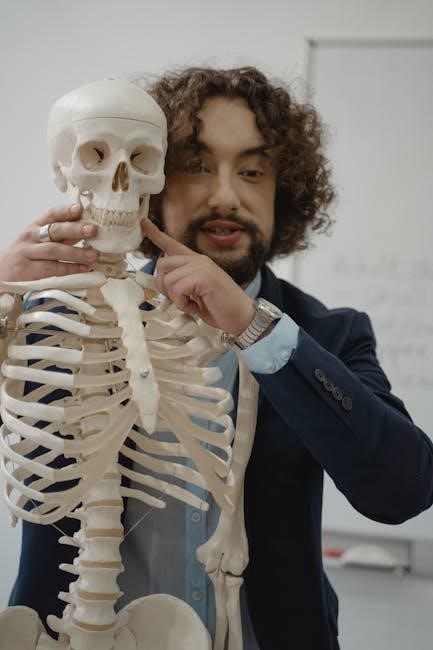
Homeostasis, maintaining internal balance, is a core concept in anatomy & physiology, detailed in freely available PDF textbooks like those from OpenStax.
Maintaining Internal Balance
Maintaining internal balance, or homeostasis, is paramount for survival, representing a dynamic equilibrium within the human body. This crucial process ensures optimal conditions for cellular function, despite constant external fluctuations. Resources like the OpenStax Anatomy & Physiology textbooks, freely accessible as PDFs, thoroughly explain these regulatory mechanisms.
These texts detail how the body utilizes various control systems – nervous and endocrine – to regulate temperature, pH, glucose levels, and more. Understanding these systems is fundamental to grasping physiological processes. The importance of feedback loops, both negative and positive, in maintaining this delicate balance is also emphasized within these educational materials. Exploring these concepts through readily available PDFs provides a solid foundation for further study in anatomy and physiology.
Feedback Mechanisms
Feedback mechanisms are integral to homeostasis, representing the body’s sophisticated control systems. These mechanisms, detailed in resources like the OpenStax Anatomy & Physiology PDFs, operate to maintain internal stability. Negative feedback, the most common type, reverses a change in a controlled variable, returning it to its set point – think of body temperature regulation. Conversely, positive feedback amplifies the initial change, often seen in blood clotting or childbirth.
Understanding these loops is crucial for comprehending physiological responses. The freely available PDFs provide clear explanations and examples, illustrating how these mechanisms work in concert to maintain a stable internal environment. Studying these concepts through accessible materials like these textbooks is essential for a strong grasp of human anatomy and physiology.

Anatomical Terminology
Anatomical terminology, covered in essential A&P PDFs, provides a standardized vocabulary for describing body structures and their relationships precisely and effectively.
Directional Terms
Directional terms are fundamental to understanding anatomical descriptions, and are thoroughly explained within comprehensive essentials of human anatomy & physiology PDF resources. These terms, like superior, inferior, anterior, posterior, medial, and lateral, establish relative positions of body parts. For instance, the head is superior to the abdomen, while the feet are inferior. The nose is anterior to the ears, and the spine is posterior.
Understanding these terms is crucial for accurately interpreting medical imaging and clinical reports. Resources like those from OpenStax and LibreTexts emphasize mastering these concepts. Proximal and distal describe positions relative to a point of attachment, such as the shoulder or hip. Superficial and deep indicate proximity to the body surface. Utilizing these terms ensures clear and concise communication within the medical field, as detailed in preparatory course textbooks.
Body Planes and Sections
Body planes and sections are essential concepts covered in essentials of human anatomy & physiology PDF materials, enabling visualization of internal structures. The sagittal plane divides the body into left and right portions; a midsagittal plane creates equal halves. The frontal (coronal) plane separates anterior and posterior sections, while the transverse (horizontal) plane divides the body into superior and inferior parts.
Sections, or cuts, are made along these planes for anatomical study. Cross-sections, transverse sections, and longitudinal sections reveal different views of organs and tissues. Resources like OpenStax textbooks and Oak Meadow coursebooks utilize diagrams illustrating these planes and sections. Understanding these concepts is vital for interpreting medical imaging, such as CT scans and MRIs, and is a cornerstone of anatomical study, as highlighted in preparatory course materials.

Medical Imaging
Medical imaging techniques, like X-rays, MRI, and CT scans, are crucial for visualizing internal structures, often referenced within essentials of human anatomy & physiology PDFs.
X-Rays
X-rays represent a foundational medical imaging technique, utilizing electromagnetic radiation to create images of internal structures. These images are formed based on the differing densities of tissues; denser materials, like bone, absorb more radiation and appear whiter, while softer tissues allow more radiation to pass through, appearing darker.
Within the context of studying essentials of human anatomy & physiology, understanding X-ray interpretation is vital. PDF resources and textbooks, such as those from OpenStax, frequently include X-ray examples to illustrate anatomical landmarks and pathological conditions.
While relatively inexpensive and readily available, X-rays have limitations. They expose patients to ionizing radiation and provide limited visualization of soft tissues. Despite these drawbacks, X-rays remain a valuable diagnostic tool, particularly for identifying fractures, pneumonia, and certain types of foreign bodies, often detailed in comprehensive anatomy and physiology materials;
MRI and CT Scans
MRI (Magnetic Resonance Imaging) and CT (Computed Tomography) scans are advanced medical imaging techniques offering detailed views of the human body. CT scans utilize X-rays taken from multiple angles to create cross-sectional images, providing excellent visualization of bone and soft tissues. MRI, conversely, employs strong magnetic fields and radio waves to generate highly detailed images, particularly excelling at differentiating soft tissue structures.
Studying essentials of human anatomy & physiology benefits greatly from understanding these modalities. PDF textbooks and online resources, like those from OpenStax, often feature MRI and CT scan images alongside anatomical illustrations.
These scans are crucial for diagnosing a wide range of conditions, from tumors and internal injuries to neurological disorders. While more expensive than X-rays, their superior image quality often justifies the cost, providing invaluable insights for accurate diagnosis and treatment planning, as detailed in comprehensive anatomy and physiology learning materials.
The Chemical Level of Organization
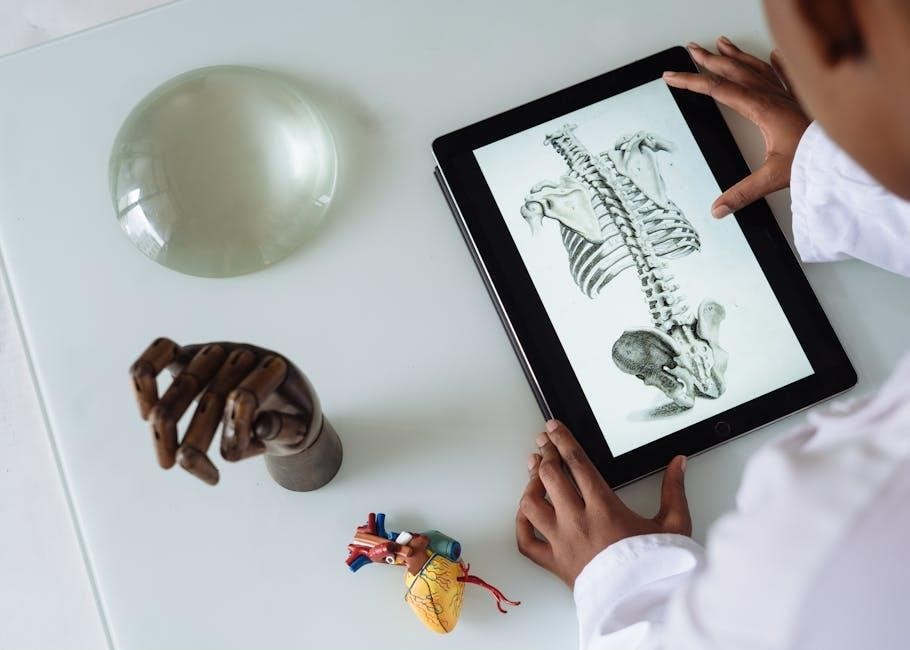
Essentials of human anatomy & physiology begin with understanding elements, atoms, and chemical bonds – foundational concepts detailed in accessible PDF textbooks.
Elements and Atoms
Elements and atoms form the fundamental building blocks of all matter, including the human body, as detailed in essentials of human anatomy & physiology resources. These resources, often available as free PDF downloads like those from OpenStax, explain that only a handful of elements are crucial for life.

Key elements—oxygen, carbon, hydrogen, and nitrogen—comprise approximately 96% of the body’s mass. Atoms, the smallest unit of an element, consist of protons, neutrons, and electrons. Understanding atomic structure is vital, as it dictates how atoms interact. These interactions, forming chemical bonds, are central to understanding physiological processes.
PDF textbooks emphasize that the number of protons defines an element, while isotopes are variations with differing neutron counts. The behavior of electrons determines an atom’s chemical properties and its ability to bond with other atoms, creating molecules essential for life’s functions.
Chemical Bonds
Chemical bonds, thoroughly explained in essentials of human anatomy & physiology PDFs like those offered by OpenStax, are the forces holding atoms together to form molecules. These bonds arise from interactions between electrons, crucial for the body’s structural and functional integrity.
Ionic bonds involve electron transfer, creating ions with opposite charges that attract. Covalent bonds share electrons, forming stable molecules. Hydrogen bonds, weaker interactions, are vital for properties of water and protein structure. Understanding these bond types is fundamental.
Resources highlight how bond strength influences molecule stability and reactivity. Chemical reactions, driven by bond breaking and formation, underpin all physiological processes. These PDFs often include diagrams illustrating bond formation and emphasize their role in creating the complex molecules necessary for life, like proteins and nucleic acids.
Inorganic and Organic Compounds
Essentials of human anatomy & physiology PDFs detail inorganic compounds like water and salts, alongside carbon-based organic molecules vital for life’s processes.
Inorganic Compounds Essential to Human Functioning
Inorganic compounds, though lacking carbon-hydrogen bonds, are fundamentally crucial for maintaining human life, as detailed in essentials of human anatomy & physiology PDFs. Water, comprising roughly 60-70% of the human body, serves as a solvent, transport medium, and participates in numerous chemical reactions. Electrolytes – including sodium, potassium, calcium, and chloride – are vital for nerve impulse transmission, muscle contraction, and maintaining fluid balance.
Acids and bases, also inorganic, contribute to pH regulation, essential for enzymatic activity and overall cellular function. Oxygen, though a single element, is indispensable for cellular respiration, the process generating energy. Carbon dioxide, a waste product of respiration, is transported via the blood and exhaled. These inorganic components, often overlooked, underpin the complex biochemical processes that define human physiology, and are thoroughly covered within comprehensive anatomy and physiology resources.
Organic Compounds Essential to Human Functioning
Organic compounds, characterized by carbon’s unique bonding capabilities, are the building blocks of life, extensively detailed in essentials of human anatomy & physiology PDFs. Carbohydrates provide energy, ranging from simple sugars like glucose to complex polysaccharides like glycogen for storage. Lipids, including fats, oils, and phospholipids, offer long-term energy reserves, insulation, and form cellular membranes.
Proteins, composed of amino acids, perform diverse functions – enzymatic catalysis, structural support, transport, and immune defense. Nucleic acids, DNA and RNA, carry genetic information and direct protein synthesis. Vitamins, organic molecules required in small amounts, act as coenzymes or participate in metabolic pathways. Understanding these organic compounds is paramount to grasping the intricacies of human physiology, as highlighted in detailed educational materials.
The Cellular Level of Organization
The cellular level represents a fundamental step in understanding the human body, thoroughly explored within essentials of human anatomy & physiology PDF resources. Cells, the basic units of structure and function, exhibit diverse forms and specialized roles. These microscopic entities contain organelles – structures performing specific tasks like energy production (mitochondria) and protein synthesis (ribosomes).
Cell membranes regulate substance passage, maintaining internal homeostasis. Cellular processes, including metabolism, growth, and reproduction, are crucial for tissue and organ function. Studying cells provides insight into disease mechanisms and therapeutic interventions. Comprehensive textbooks and online materials detail cellular structures, functions, and interactions, forming a cornerstone of anatomical and physiological knowledge.