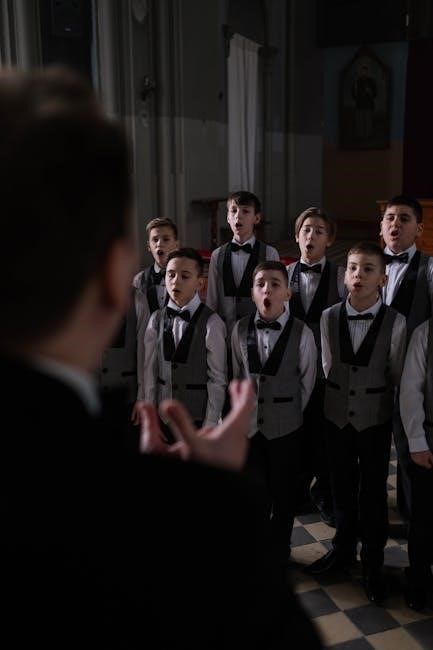
Hallelujah Chorus PDF: A Comprehensive Guide
Navigating the digital realm for Handel’s iconic “Hallelujah” chorus PDFs requires understanding sources, legality, and arrangement types. This guide provides
essential information for choral directors, singers, and enthusiasts seeking accessible sheet music.
What is the Hallelujah Chorus?
The “Hallelujah” Chorus is arguably the most famous section of George Frideric Handel’s 1741 masterpiece, Messiah. It’s a triumphant and celebratory choral work, culminating a narrative of Christ’s suffering and ultimate victory. The chorus appears in the third part of Messiah, focusing on the resurrection and ascension of Jesus Christ.
Musically, it’s characterized by its dynamic contrasts, powerful homophonic texture, and the repeated exclamation of “Hallelujah.” The text is drawn from the Book of Revelation (19:6) and several Psalms. Its impact is profound; it’s become synonymous with joy, praise, and the spirit of the holiday season, frequently performed by choirs worldwide.
Finding a Hallelujah Chorus PDF allows access to this iconic piece for study, performance, and personal enjoyment. However, understanding copyright and sourcing legitimate versions is crucial, as detailed in subsequent sections of this guide. The chorus’s enduring popularity ensures a constant demand for accessible sheet music.
Historical Context of Handel’s Messiah
George Frideric Handel, a German-British Baroque composer, composed Messiah in Dublin, Ireland, in 1741. Despite being a prolific composer of Italian operas, Handel shifted focus towards English oratorios later in life, responding to changing public tastes and financial pressures. Messiah was a departure, uniquely focusing entirely on biblical texts – a bold move for the time;
The libretto was compiled by Charles Jennens, a wealthy patron of the arts, drawing from the King James Bible and the Book of Common Prayer. Handel composed the entire work in just 24 days, a testament to his compositional genius. The premiere in Dublin was a charitable event, raising funds for hospitals and debtors’ prisons.
Initially, oratorios faced some criticism in England, but Messiah gradually gained acceptance and became immensely popular. Accessing a Hallelujah Chorus PDF today allows modern audiences to connect with this historical masterpiece and appreciate its enduring legacy. Understanding this context enriches the experience of performing or studying the work.
The Significance of the “Hallelujah” Text
The “Hallelujah” chorus, culminating Part II of Messiah, is arguably the most famous choral work in Western music. Its text originates from Revelation 11:15 and Psalm 106:48, proclaiming God’s sovereignty and ultimate triumph. The sheer power and joy expressed in “Hallelujah” resonate deeply with audiences, transcending religious boundaries.

Handel’s musical setting dramatically amplifies the text’s meaning. The dynamic contrasts, soaring melodies, and full orchestral accompaniment create a sense of overwhelming majesty. The repetition of “Hallelujah” builds in intensity, culminating in a glorious affirmation of faith.
Finding a Hallelujah Chorus PDF allows singers to delve into the intricacies of Handel’s composition and appreciate how skillfully he married music and text. The chorus isn’t merely a celebratory outburst; it’s a theological statement, a powerful declaration of God’s kingship. Its enduring popularity speaks to the universal human need for hope and praise.

Finding Hallelujah Chorus PDFs Online
Locating Hallelujah chorus PDFs involves exploring various online resources, ranging from legitimate sheet music retailers to free, yet potentially legally ambiguous, websites.
Legitimate Sources for Sheet Music PDFs
Securing a Hallelujah Chorus PDF from reputable sources ensures quality, accuracy, and legal compliance. Musicnotes.com and Sheet Music Plus are excellent starting points, offering officially licensed digital sheet music for purchase. These platforms typically provide various arrangements – full score, vocal scores, and even simplified versions – catering to diverse choral ensembles.
IMSLP (International Music Score Library Project), while primarily focused on public domain works, occasionally hosts arrangements of Handel’s Messiah, including the Hallelujah Chorus, that are legally available. Always verify the copyright status before downloading. University and conservatory libraries often offer digital access to their sheet music collections, potentially including the Hallelujah Chorus, for registered students and researchers.

Hal Leonard and Shawnee Press, major music publishers, frequently sell digital downloads of choral arrangements. Purchasing from these sources supports composers, arrangers, and the music industry, guaranteeing a reliable and legally sound PDF.
Free vs. Paid PDF Options: A Comparison
While numerous websites offer free Hallelujah Chorus PDFs, quality and legality are significant concerns. Free options often originate from scans of older editions, potentially containing errors or incomplete sections. Copyright infringement is a major risk with unauthorized downloads, impacting composers and publishers.
Paid PDFs, sourced from legitimate vendors like Musicnotes.com or Sheet Music Plus, guarantee accuracy, clarity, and proper licensing. These versions are typically digitally typeset, offering superior readability and print quality. Paid options frequently include accompaniment tracks or rehearsal aids, enhancing the learning experience.
Consider the ensemble’s needs. A casual choir might suffice with a carefully vetted free arrangement, but professional groups or those seeking performance-ready scores should invest in a paid, high-quality PDF. The cost difference often reflects the level of accuracy, completeness, and legal security provided.
Copyright Considerations When Downloading PDFs
Downloading Hallelujah Chorus PDFs without proper authorization can infringe on copyright laws. Handel’s work, though centuries old, remains protected, and modern editions are copyrighted by publishers. Unauthorized reproduction, distribution, or performance of copyrighted material is illegal and carries potential penalties.
Public domain status applies to the original composition, but arrangements, editions, and engravings are typically protected. Websites offering “free” PDFs may operate illegally, exposing users to legal risks. Always verify the source’s legitimacy and licensing terms before downloading.
Legitimate sources clearly state copyright information and licensing agreements. Purchasing a PDF grants you a license for personal or ensemble use, adhering to specific terms. Respecting copyright ensures composers and publishers are compensated for their work, fostering continued musical creation and accessibility. Prioritize ethical sourcing to support the choral music community.

Understanding the Different Arrangements
Hallelujah Chorus PDFs vary significantly; full scores display all parts, while vocal scores focus on singers’ lines. Arrangements cater to diverse choirs—SATB, SSA—and skill levels, including simplified versions.
Full Score vs. Vocal Score PDFs
When searching for Hallelujah Chorus PDFs, understanding the difference between a full score and a vocal score is crucial. A full score presents all instrumental and vocal parts on multiple staves, offering a comprehensive view of Handel’s orchestration. This is invaluable for conductors studying the work’s intricacies, analyzing harmonies, and understanding the interplay between sections.
Conversely, a vocal score, also known as a choir score, primarily displays the vocal lines – soprano, alto, tenor, and bass – often with piano accompaniment. It omits the detailed instrumental parts found in the full score, making it more manageable for singers to follow during rehearsals and performances. Vocal scores prioritize clarity for the choral ensemble.
Therefore, conductors typically prefer full scores for study and preparation, while singers generally utilize vocal scores. Some PDFs may offer both versions, providing versatility. Consider your specific needs when selecting a Hallelujah Chorus PDF; a full score is excellent for analytical purposes, while a vocal score is ideal for practical performance.
Arrangements for Different Choirs (SATB, SSA, etc.)
The Hallelujah Chorus, originally scored for a large Baroque orchestra and chorus, is frequently adapted for various choral ensembles. When seeking a PDF, be mindful of the arrangement type to ensure it suits your choir’s composition. SATB (Soprano, Alto, Tenor, Bass) is the most common arrangement, providing a full harmonic texture and accommodating mixed choirs.
However, other arrangements exist. SSA (Soprano, Soprano, Alto) is designed for women’s choirs, often simplifying the harmonic structure. TTBB (Tenor, Tenor, Bass, Bass) caters to men’s choirs, requiring adjustments to vocal ranges. Some arrangements may be SAB (Soprano, Alto, Bass), suitable for smaller mixed choirs or those with limited tenor voices.
PDF availability varies depending on the arrangement. Specialized choral music websites often offer a wider selection than general sheet music repositories. Always verify the voicing before downloading to avoid compatibility issues. Consider the skill level of your choir when choosing an arrangement; simplified versions may be available for less experienced groups.
Simplified Arrangements for Beginners
For choirs or individuals new to choral music, tackling the full Hallelujah Chorus can be daunting. Fortunately, numerous simplified arrangements are available as PDFs, designed to make this masterpiece accessible to beginners. These versions often reduce the vocal complexity, featuring fewer harmonies and easier rhythms.
Simplified PDFs frequently focus on the core melodic line and basic harmonic support, omitting intricate ornamentation or countermelodies. Some arrangements may present the music in unison or two-part harmony, further reducing the difficulty. These adaptations are ideal for school choirs, community groups, or individuals learning to sight-read.
When searching for beginner-friendly PDFs, look for arrangements specifically labeled as “easy,” “simplified,” or “beginner.” Websites specializing in choral music often categorize arrangements by difficulty level. Remember to preview the score before downloading to ensure it aligns with your choir’s capabilities. These arrangements provide a stepping stone to appreciating and performing Handel’s masterpiece.

Using Hallelujah Chorus PDFs
Effectively utilizing Hallelujah Chorus PDFs involves selecting appropriate software, considering printing needs for large scores, and employing focused practice techniques for optimal results.
Software for Viewing and Editing PDFs
Numerous software options cater to viewing and, sometimes, editing Hallelujah Chorus PDFs. Adobe Acrobat Reader remains a standard, offering reliable viewing and basic annotation features – essential for marking vocal parts or dynamics. For more advanced editing, Adobe Acrobat Pro provides tools to rearrange pages, add comments, and even edit text (though caution is advised when altering musical notation directly).
Alternatives include Foxit PDF Reader, a lightweight and fast option with similar viewing capabilities to Acrobat Reader. PDFelement is another strong contender, offering a balance of viewing, editing, and conversion features. For musicians needing to transpose or manipulate the score, dedicated music notation software like MuseScore or Sibelius can import PDFs, though the conversion may require manual correction.
Consider your needs: simple viewing requires only a basic reader, while extensive editing demands a more robust, paid solution. Ensure the software is compatible with your operating system and can handle large, complex scores without performance issues. Chrome’s built-in PDF viewer is also sufficient for basic viewing.
Printing Considerations for Large Scores
Printing a Hallelujah Chorus PDF, often a full orchestral or choral score, demands careful consideration. Standard home printers may struggle with large page sizes and complex layouts. Ensure your printer supports the paper size specified in the PDF settings – typically 11×17 inches or larger for full scores. High-quality paper is crucial; thicker paper prevents bleed-through and provides a more durable score.
Scaling is vital. Verify the print preview accurately reflects the intended size and that no musical elements are cut off. Test print a small section first to confirm correct scaling. Consider using a professional print shop for optimal results, especially for large ensembles. They offer large-format printing and binding services.
Page orientation and margins also matter. Ensure pages are oriented correctly for easy reading during rehearsal. Adjust margins if necessary to avoid cropping important notation. For multi-page scores, explore options for booklet printing or spiral binding to facilitate page turning during performance. Chrome’s print settings offer basic adjustments, but dedicated PDF editors provide more control.
Practicing with a PDF: Tips and Techniques
Effectively utilizing a Hallelujah Chorus PDF for practice requires more than just viewing notes. Utilize PDF annotation tools to mark dynamics, phrasing, and difficult passages directly onto the score. Many PDF viewers allow highlighting and adding text comments – invaluable for individual study and rehearsal notes.
Zooming is essential for detailed work. Focus on individual vocal lines or instrumental parts, especially during section learning. Combine PDF practice with audio recordings of the Hallelujah Chorus to internalize the musical phrasing and tempo. Follow along with the score while listening, reinforcing note recognition and rhythmic accuracy.
Consider using a tablet or large-screen monitor for comfortable viewing during practice. Experiment with different PDF viewing software to find features that suit your learning style. Regularly review marked sections and incorporate feedback from rehearsals. Consistent, focused practice with a well-annotated PDF will significantly enhance your performance.

Related Searches & Resources
Explore further into Handel’s works and choral music communities online. Discover resources for PDF sheet music, and delve into Leonard Cohen’s “Hallelujah” connections.
Leonard Cohen’s “Hallelujah” and its Connection
While seemingly disparate, Leonard Cohen’s “Hallelujah” and Handel’s “Hallelujah Chorus” share a fascinating, albeit indirect, connection rooted in the word itself – a Hebrew expression of praise. Cohen’s song, released in 1984, gained widespread recognition through various covers, becoming a modern hymn celebrated for its lyrical depth and emotional resonance.
The link isn’t musical, but conceptual. Both works utilize “Hallelujah” as a powerful exclamation, though with vastly different contexts. Handel’s chorus is a triumphant declaration of God’s majesty within a Christian liturgical framework, while Cohen’s explores themes of love, loss, and faith with ambiguity and personal reflection.
Interestingly, searches for “Hallelujah Chorus PDF” often yield results alongside Cohen’s song, demonstrating a cultural association. The enduring popularity of both pieces highlights the word’s universal appeal and its capacity to evoke profound emotion. This shared nomenclature often leads individuals exploring one work to discover the other, creating a unique cross-cultural connection in the digital age.
Other Handel Works Available as PDFs
Beyond the immensely popular “Hallelujah Chorus,” numerous other compositions by George Frideric Handel are readily available as PDF sheet music. Exploring these works offers a broader appreciation for his prolific output and compositional style. Commonly found PDFs include selections from his opera Giulio Cesare, particularly the aria “Care grossa,” and excerpts from Rinaldo, such as “Lascia ch’io pianga.”
Oratorio enthusiasts can find complete scores or individual arias from Messiah beyond the “Hallelujah Chorus,” like “He Shall Feed His Flock” and “I Know That My Redeemer Liveth.” Instrumental pieces, such as the Water Music and Music for the Royal Fireworks suites, are also frequently digitized and offered as PDFs, catering to orchestral and chamber ensembles.

Many websites specializing in choral music and classical scores provide these resources, ranging from free public domain editions to commercially available, professionally arranged PDFs. Discovering these works expands the repertoire for choirs and musicians seeking to delve deeper into Handel’s magnificent musical legacy.
Online Communities for Choral Music
Engaging with online communities dedicated to choral music provides invaluable resources and support for those working with the “Hallelujah Chorus” and other choral pieces. Platforms like ChoralNet offer forums for discussing repertoire, sharing performance tips, and seeking advice on challenging passages. Facebook groups dedicated to choral singing frequently host discussions about specific works, including Handel’s masterpiece, with members sharing their PDF arrangements and rehearsal strategies.
Reddit’s r/choralmusic is another active forum where conductors and singers exchange ideas and resources. Websites like Musicnotes and Sheet Music Plus often have comment sections where users discuss arrangements and offer feedback. These communities are excellent places to find alternative editions of the “Hallelujah Chorus” PDF, discover helpful practice techniques, and connect with fellow musicians passionate about choral performance.
Furthermore, many choral directors maintain blogs or websites where they share their experiences and resources, including links to useful PDFs and performance insights.